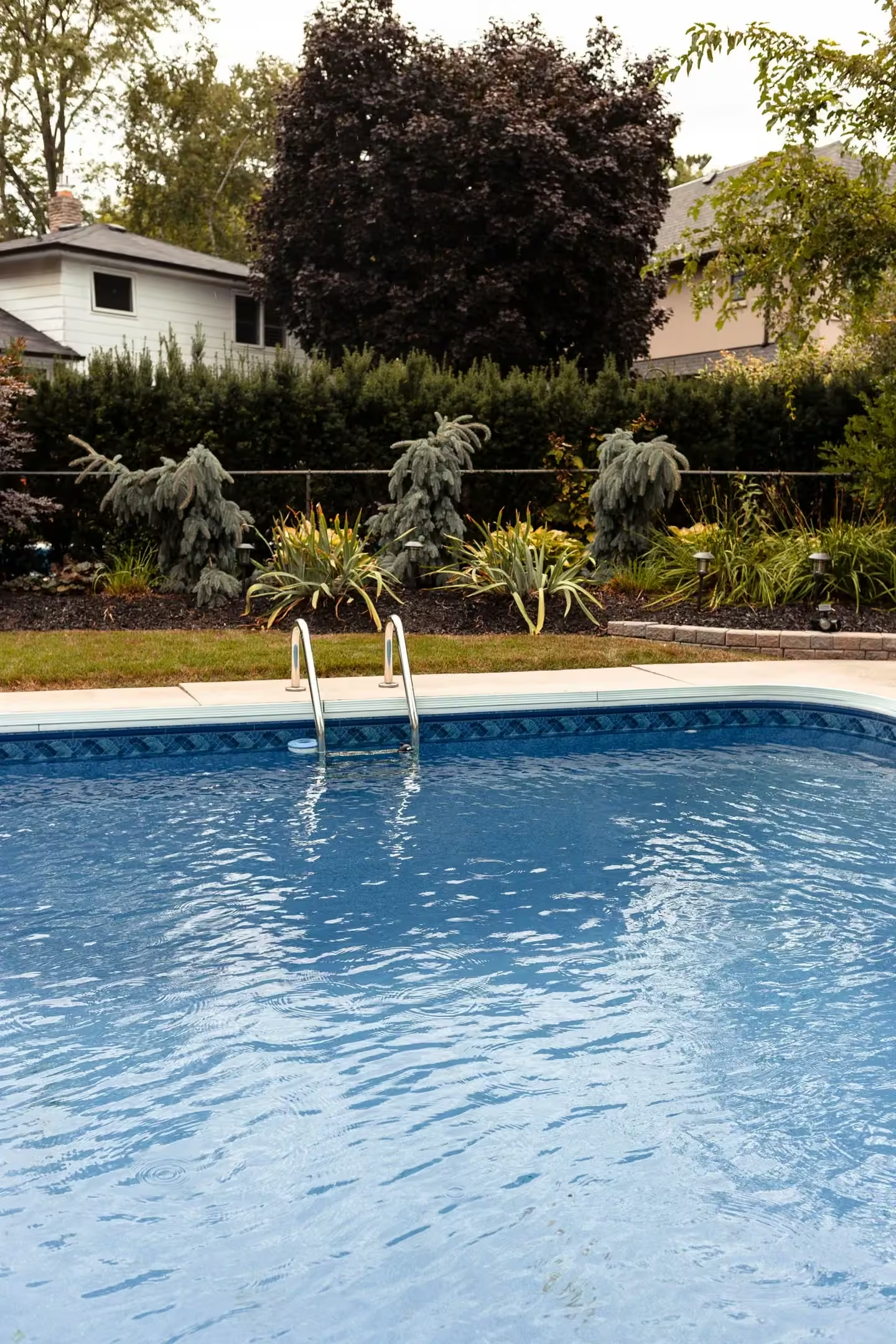
Weekly service
Skim, brush, vacuum, empty baskets, check the pump and filter, test and dose. Readings logged and sent to you the same day.
$145–$220 a month, chemicals in
Stabiliser builds up and locks chlorine so it cannot do its job. At 100 ppm of stabiliser you need around 7.5 ppm of free chlorine to sanitise, and almost nobody runs that. Put your test numbers into the checker below and see where your water actually sits.
We will confirm the monthly price and the first visit date. No card details to enquire.
Put in what your test strip or kit says. This flags what is out of range, and more usefully it works out how much chlorine your pool actually needs given how much stabiliser is in it — the calculation that explains most green pools.
With this much stabiliser in the water, the chlorine you have is not enough to actually sanitise. This is the single most common reason a pool goes green while the test strip still shows chlorine.
General guidance for a residential chlorine pool, not a substitute for a proper test. Strips drift and expire; a drop kit or a lab test is more reliable. Salt pools, bromine and indoor pools work to different targets.
Most of the value in pool service is invisible, which is why people cancel it. Skimming takes five minutes. Keeping four chemical levels in range through a hot summer is the actual job.
Skim, brush, vacuum, empty baskets, check the pump and filter, test and dose. Readings logged and sent to you the same day.
You do the netting and brushing, we handle the water. Fortnightly testing, dosing and a written log for people who like doing half of it themselves.
Waterline tile scale, stubborn staining, filter strip-downs and cartridge changes. Booked separately from routine service.
Apartment complexes, hotels and community pools, with the testing frequency and record-keeping your health department expects.
The most common complaint in this trade is a monthly service price that looked reasonable until the chemical invoice arrived. Ours is one number. If the pool needs more chlorine in August than in April, that is our problem, not a line item.
| Pool | Weekly |
|---|---|
| Small, under 12,000 gallons | $145 |
| Average, 12,000–20,000 | $175 |
| Large, over 20,000 | $220 |
| Spa or hot tub only | $95 |
| Every two weeks instead | Deduct 35% |
| Chemistry only, no cleaning | $85 |
| All standard chemicals | Included |
| Water testing and written log | Included |
| Filter backwash and basket clearing | Included |
| Job | Price |
|---|---|
| One-time clean, clear water | $180–$260 |
| Green pool recovery | $350–$900 |
| Filter cartridge clean | $95 |
| Cartridge replacement set | $220–$480 |
| Sand or DE media change | $320–$560 |
| Salt cell clean | $110 |
| Seasonal opening or closing | $240–$420 |
| Partial drain for high stabiliser | $180 plus water |
Specialty chemicals for a recovery, replacement parts, water to refill after a drain, and any repair work. Those get quoted before we do them. Everything used to keep a healthy pool balanced week to week is in the monthly price.
Almost every green pool comes back without draining it. What varies is how many days and how much chemical, and that is genuinely visible from a photo, so there is no reason for anyone to quote you blind.
Early algae, usually a few days of neglect or a stabiliser problem. Balanced, shocked and filtered for 24 to 48 hours. Typically one visit plus a follow-up.
Established bloom. Needs sustained chlorine over several days, filter running continuously, and usually a filter clean partway through. Three to five days.
Weeks or months untreated. Debris removal first, then repeated treatment. Occasionally a partial drain genuinely is cheaper than the chemicals. We will tell you which.
Draining a pool without knowing what you are doing can pop it out of the ground when the water table is high, and that is a five-figure problem rather than a green one. And running the filter only a few hours a day during a recovery just prolongs it — the filter is doing most of the work, not the chemicals. If your pool is green, leave it full and keep the pump running until somebody looks at it.
Each is its own price and you can take just one. Combining them onto a routine visit saves you a call-out rather than being a package we made up.
Cartridge cleans and replacements, sand and DE media changes. A dirty filter undoes most of what the chemicals are trying to do.
Diagnosis, seal and impeller work, and variable-speed replacement where the running cost saving actually justifies it.
Cell inspection and cleaning, output calibration, and honest advice on whether converting is worth it for your pool.
Seasonal opens and winterisation, covers on and off, lines blown and plugged where the climate needs it.
A picture of the water and your latest test results if you have them. That is usually enough for us to tell you whether you need routine service or a recovery first.
Skim, brush, vacuum, baskets, filter check, then test and dose. Nobody needs to be home as long as we can get through the gate.
Chlorine, pH, alkalinity and stabiliser, plus what we added and why. Over a season that log tells you far more about your pool than any single visit does.
Yes, and you should ask every company this before signing. Plenty quote an attractive monthly service price and then invoice chemicals on top, which in a hot summer can double the bill. Ours is one number covering chlorine, acid, alkalinity adjuster and algaecide as needed.
Because chlorine tablets and stabilised granular chlorine contain it, and it does not evaporate or get consumed. It only leaves through splash-out, backwashing or draining. That is why pools dosed only with tablets drift towards locked-up chlorine over a season or two.
In a warm climate, yes, though usually at a reduced frequency. Where pools close for the season, no — you need a proper closing and then nothing until spring. We will not sell you winter visits on a covered pool that does not need them.
Salt is not chlorine-free; it generates chlorine from salt. It is gentler on skin and eyes and more convenient, but the cell is a wear part that costs real money to replace every few years, and salt is harder on some stone and metal. It suits some pools and not others.
Long enough to turn the water over roughly once a day, which for most residential pools is eight to twelve hours in summer on a single-speed pump, or longer at low speed on a variable-speed one. Cutting run time to save electricity is the fastest way to get an algae problem.
Plenty of people do, and if your numbers in the checker above are all in range then you are managing fine. The people who struggle are usually the ones with high stabiliser, because no amount of tablets fixes that. If that is you, one visit to sort the water may be all you need.
We will tell you whether it needs routine service or a recovery, what that costs, and when we can start. If your water is fine, we will say that too.